
Using Svelte DOM Components
The reactive components in the ui-svelte-dom module let you declaratively display parts of a Store in a web browser, where Svelte's DOM runtime is available.
These are specifically designed to render HTML table content in a browser. Here are a few representative examples:
The ui-svelte-dom module is client-only: its package export is available under the browser condition, and these components do not support server-side rendering.
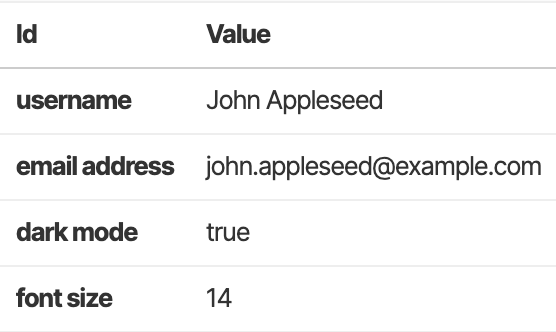
The ValuesInHtmlTable component is the simplest way to render Store values:
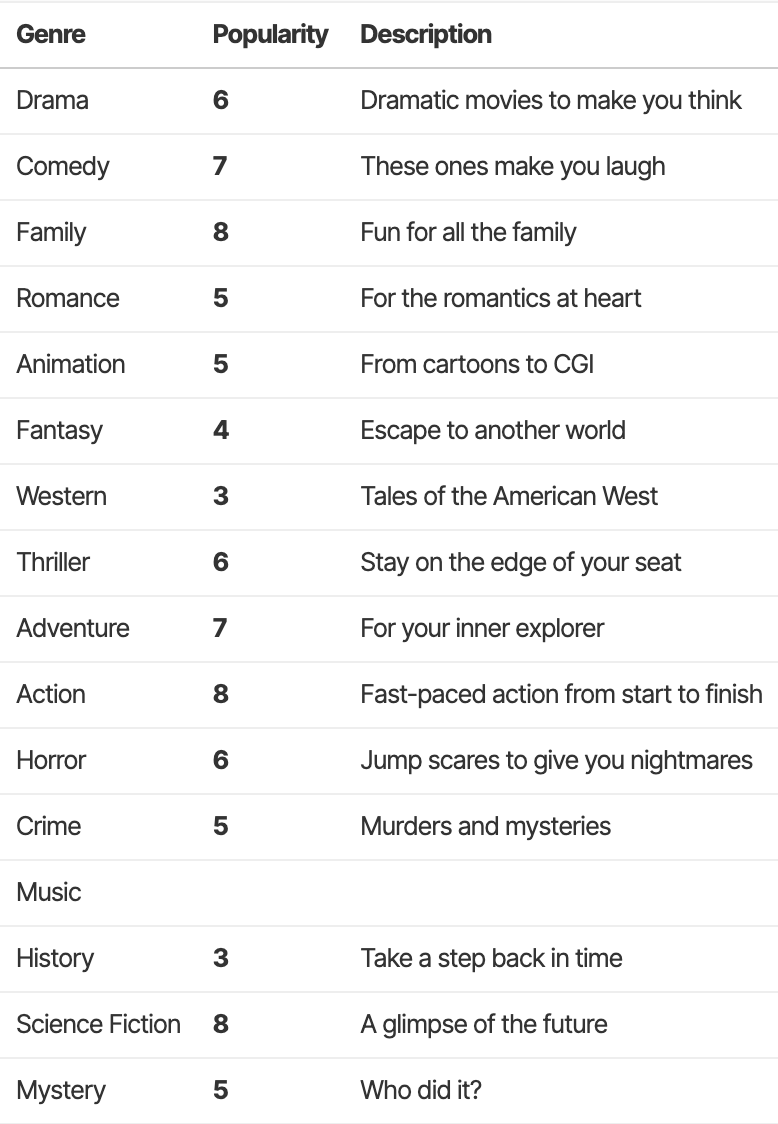
The RelationshipInHtmlTable component renders related local and remote rows side by side:
Styling and class names are intentionally basic, since you are expected to style them with CSS to fit your app's overall visual language.
The easiest way to understand these components is to see them all in action in the UI Components (Svelte) demos. There are table-based components for rendering Tables, sorted Tables, Values, and so on:
| Component | Purpose | |
|---|---|---|
ValuesInHtmlTable | Renders Values. | demo |
TableInHtmlTable | Renders a Table. | demo |
SortedTableInHtmlTable | Renders a sorted Table, with optional interactivity. | demo |
SliceInHtmlTable | Renders a Slice from an Index. | demo |
RelationshipInHtmlTable | Renders the local and remote Tables of a relationship. | demo |
ResultTableInHtmlTable | Renders a ResultTable. | demo |
ResultSortedTableInHtmlTable | Renders a sorted ResultTable, with optional interactivity. | demo |
There are also editable components for individual Cells and Values:
| Component | Purpose | |
|---|---|---|
EditableCellView | Renders a Cell and lets you change its type and value. | demo |
EditableValueView | Renders a Value and lets you change its type and value. | demo |
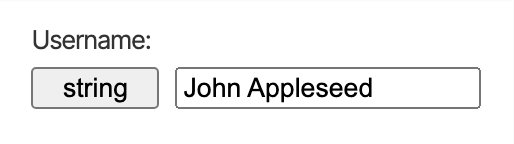
The EditableValueView component shows the inline editing controls used by the editable components:
Like ui-svelte itself, the module uses Svelte components rather than React components, so customization is done by passing component constructors, not functions that return JSX.
Having said that, the demos intentionally mirror the React DOM set so it is easy to compare the framework-specific code side by side.
If you also want a development overlay for inspecting and editing Stores, Indexes, Relationships, Queries, and other TinyBase objects, use the ui-svelte-inspector module and the
The final guide in this section shows how Provider context keeps TinyBase objects out of your component props. Please proceed to the Using Context guide.